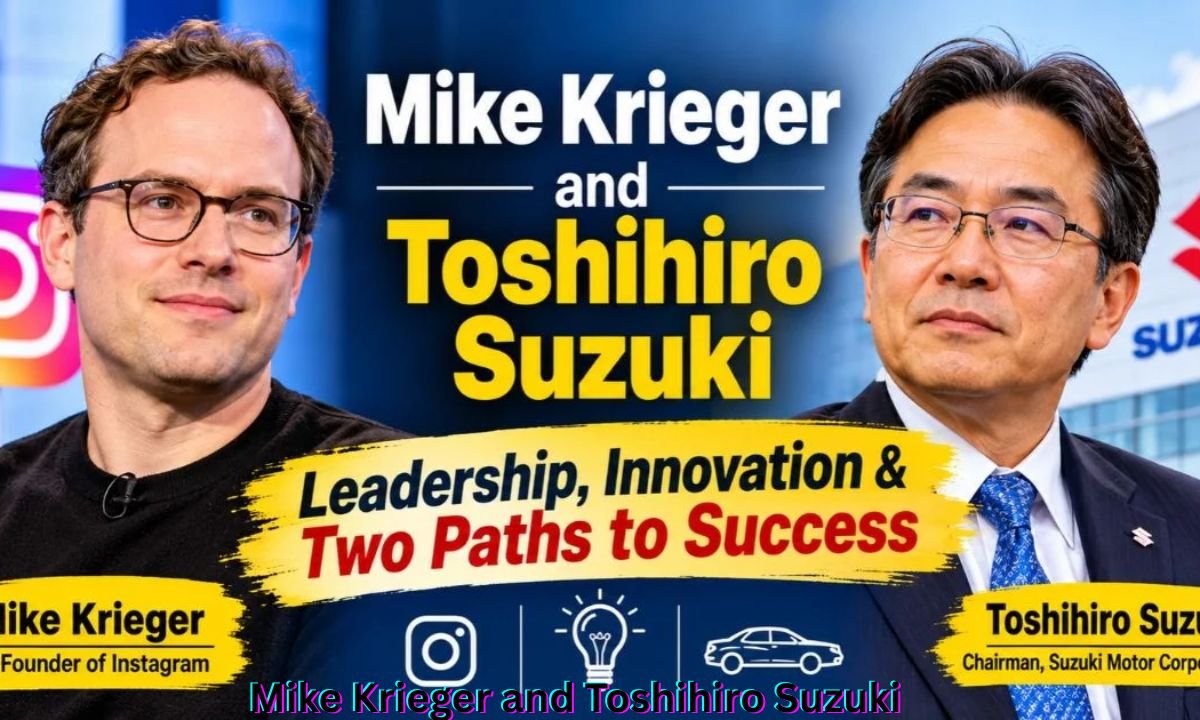
Mike Krieger and Toshihiro Suzuki have never worked together, yet people often search for them side by side. One helps lead experimental AI products at Anthropic Labs, while the other guides Suzuki Motor, a century-old automotive manufacturer. Both face huge industry shifts with one steady focus: the customer, every time.
In this guide, Mike Krieger and Toshihiro Suzuki show how innovation leadership works at two very different speeds. One tests ideas in days, the other plans in years. Let’s walk through their stories, compare their choices, and see what any business can learn from them, one step at a time.
Mike Krieger: Instagram’s Technical Architect
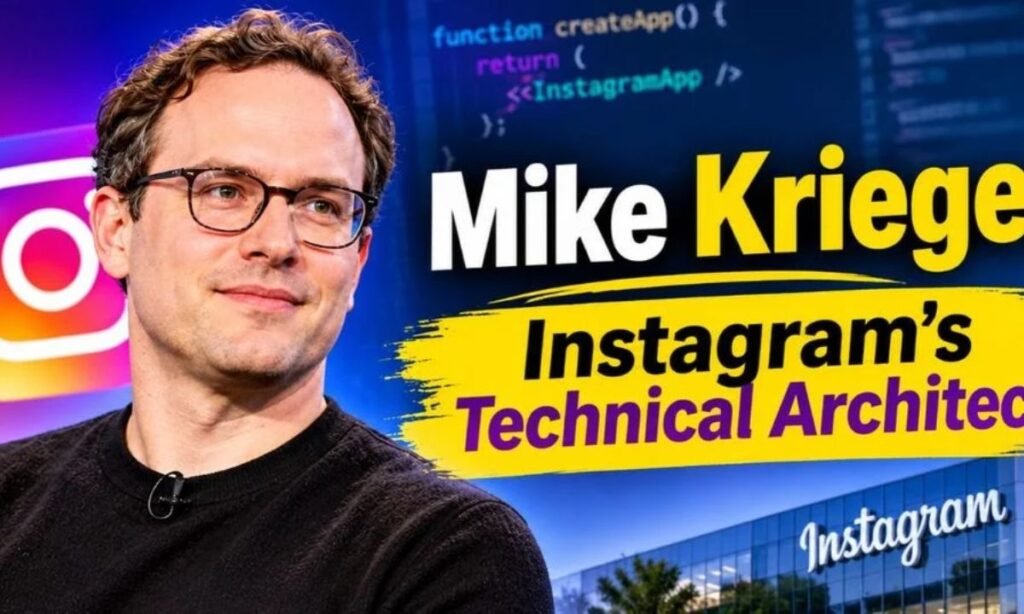
- Instagram co-founder who launched the app with Kevin Systrom in 2010
- Focused on quick, friction-free photo sharing
- Scaled the engineering organization to over 450 people
Mike Krieger built Instagram on one simple insight: most apps tried to do too much. While rivals piled on features, he and Kevin Systrom shipped quick photo sharing without friction.
That focus paid off. The platform reached a billion users, and Facebook bought it for roughly one billion dollars in 2012. Krieger stayed through the Facebook acquisition, then left in 2018.
From AI News to Experimental Products
- Co-founded Artifact, an AI news app that Yahoo later acquired
- Joined Anthropic in 2024 as Chief Product Officer
- Co-leads Anthropic Labs as of early 2026
After Artifact, Mike Krieger joined Anthropic and moved to Anthropic Labs. His job is simple: get AI products to real users fast, learn what works, and scale what matters.
Claude Code went from prototype development to a billion-dollar tool in six months. The Model Context Protocol (MCP) now sees 100 million monthly downloads as an industry standard.
| Year | Milestone | Organization |
| 2010 | Launched the photo-sharing app | |
| 2012 | Company acquired for roughly one billion dollars | |
| 2018 | Left to explore other ideas | |
| 2024 | Joined as Chief Product Officer | Anthropic |
| 2026 | Moved to co-lead experimental products | Anthropic Labs |
Toshihiro Suzuki: Modernizing an Automotive Legacy
- Joined Suzuki Motor in 1994
- Spent 20 years across manufacturing, product planning, and international operations
- Became president in 2015
Toshihiro Suzuki learned the business from several angles before taking the top job. That long path gave him a deep feel for how the company builds, plans, and sells around the world.
The brand won fans with affordable vehicles and lightweight vehicles, guided by Sho-Sho-Kei-Tan-Bi, meaning small, fewer, light, short, and beautiful. Then buyers began asking for SUVs, connected technology, and electric power.
Why India Became Suzuki’s Global Center
- 2024 announcement of a global research and development center in India
- Wholly owned by Suzuki Japan
- A battery manufacturing plant starting in 2026
In 2024, Suzuki put engineering talent directly into the market it knows best, instead of keeping development in Japan or Europe. That move reflects strategic clarity, not trend chasing.
The company committed 104 billion rupees, roughly 1.3 billion dollars, to electrification. India needs answers for limited charging infrastructure, multiple fuel types, and tight price limits, unlike affluent markets.
| Commitment | Detail |
| Research hub | Global R&D center in India, owned by Suzuki Japan |
| Investment | 104 billion rupees (about 1.3 billion dollars) |
| Manufacturing | Battery plant starting in 2026 |
| Market challenge | Limited charging, multiple fuel types, price limits |
How Different Industries Demand Different Speeds
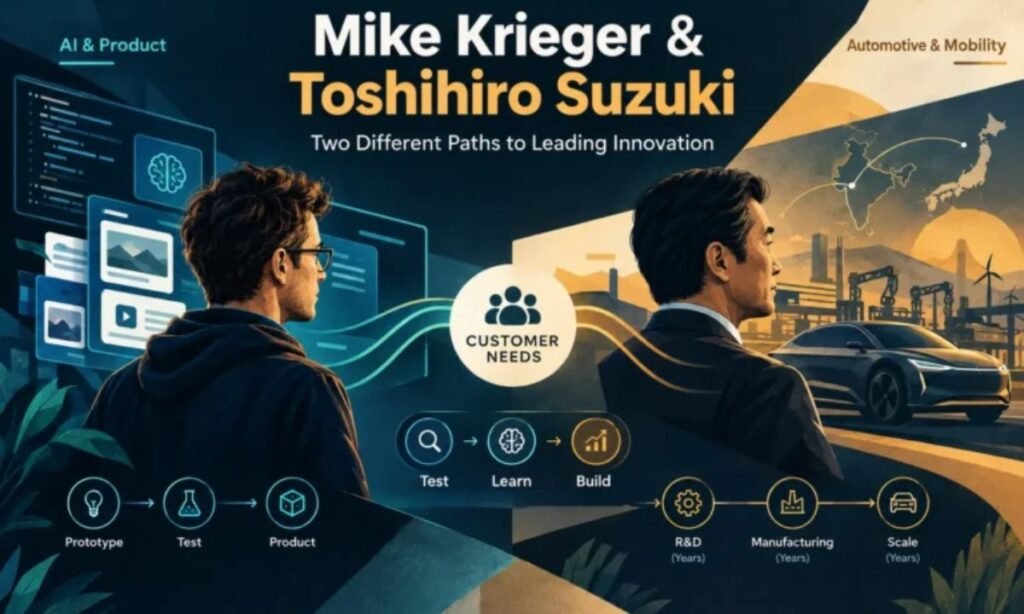
- Krieger’s transformation happens in weeks
- Suzuki’s transformation takes years
- Each pace is right for its own industry
Both leaders must lead emerging technologies they didn’t invent. Krieger works through rapid iteration, while Suzuki works through long planning cycles. Each pace fits its industry.
Artifact failed commercially but produced technology Yahoo valued enough to buy. Teams exploring AI video tools follow the same path: test early, learn fast, then scale.
| Factor | Mike Krieger | Toshihiro Suzuki |
| Time scale | Days and weeks | Years |
| Main approach | Rapid experimentation | Careful validation |
| Cost of mistakes | Lessons that compound | Billions |
| Customer focus | Real-world users | Regional market understanding |
When Suzuki’s Patient Capital Works Better
- A single production line costs hundreds of millions
- Regulatory approval takes years
- Mistakes can cost billions
Patient capital suits vehicle manufacturing. Building manufacturing capacity, then validating before mass production, takes years, and one production line costs hundreds of millions.
Suzuki still follows a customer-centric approach. Like businesses using CRM platforms for customer relationship management, it builds market understanding through deep roots in the regions where it operates.
Patterns That Repeat in Both Careers
- Start with customer needs, not what is technically possible
- Know when to simplify and avoid feature creep
- Invest in talented people before chasing technology
- Abandon assumptions that no longer work
Both leaders listen before they build. Krieger removed features from Burbn to reveal Instagram, and Suzuki keeps lightweight vehicles even as electronics grow.
Both also back people and drop outdated assumptions. Krieger tested AI news discovery despite his success, and Suzuki embraced electric vehicles (EVs) despite a combustion engines reputation.
| Pattern | Mike Krieger | Toshihiro Suzuki |
| Listen first | Photo-sharing focus | Affordable vehicle focus |
| Simplify | Removed features from Burbn | Lightweight vehicles |
| Let go of old ideas | Tested AI news discovery | Embraced electrification |
Read Also This: Prevention Cloud Explained: Key Features, Wellness Benefits, and Security
The Real Question Both Leaders Answer
- Neither invented the technologies reshaping their industries
- Krieger: turning AI capabilities into products people trust
- Suzuki: adding electric propulsion and software integration while keeping cars affordable
Neither man invented the technologies reshaping his field. Both saw what was coming and built organizations to lead the future instead of defending the past.
The pace, economics, and customers differ, but the question is the same: how do you lead business transformation without losing what made you valuable in the first place?
Frequently Asked Questions
Who Are These Two Business Leaders?
Mike Krieger and Toshihiro Suzuki are influential leaders in different industries. One focuses on technology and AI, while the other leads global automotive manufacturing.
What Companies Are They Known For?
Mike Krieger and Toshihiro Suzuki are associated with Anthropic and Suzuki Motor Corporation, respectively. Their careers reflect different approaches to business innovation.
How Did They Build Their Careers?
Mike Krieger and Toshihiro Suzuki built successful careers through leadership, experience, and innovation. Their professional journeys highlight dedication and long-term business growth.
What Makes Their Leadership Styles Different?
Mike Krieger and Toshihiro Suzuki have different leadership approaches. Krieger emphasizes digital products and AI, while Suzuki focuses on manufacturing and mobility solutions.
Have They Ever Worked Together?
Mike Krieger and Toshihiro Suzuki have no publicly documented professional partnership. They lead separate organizations and work in different business sectors.
What Industries Do They Influence?
Mike Krieger and Toshihiro Suzuki influence technology and automotive industries. Their work involves product development, customer needs, business growth, and innovation.
Why Are People Comparing Their Success?
Mike Krieger and Toshihiro Suzuki represent two paths to successful leadership. Their careers show how innovation can transform technology and traditional manufacturing.
Final Thought
Mike Krieger and Toshihiro Suzuki prove that innovation leadership has no single speed. One moves through rapid experimentation, the other through long-term investment, yet both listen closely to people. That shared habit of customer-first innovation keeps their organizations focused even while the world changes quickly around them, year after year.
The lesson from Mike Krieger and Toshihiro Suzuki is easy to borrow: simplify, test your ideas, and trust your people. Whether you build apps or cars, strategic clarity and continuous learning help you lead change without losing the values that first made your work matter to customers everywhere.








1 thought on “Mike Krieger and Toshihiro Suzuki: Two Unique Journeys of Innovation and Leadership”